Newborn Sleep Tips: 9 Ways to Get More Rest Tonight

In the early weeks, a few small tweaks to the room and the routine can give everyone more rest.
I still remember the particular kind of tired that arrives with a newborn. It is not regular tired. It is a bone-deep, blinking-at-the-clock, did-I-already-feed-her tired that makes you cry at a paper-towel commercial. With my first baby I was convinced I was doing everything wrong, because she would only sleep on my chest and woke the second I moved. I was a pediatric nurse assistant at the time, surrounded by sleep advice all day, and I still felt completely lost at 3 a.m. in my own living room.
So I want to start by telling you the thing I most needed to hear back then. Newborn sleep is supposed to be a mess. Your baby is not broken, and neither are you. That said, there are a handful of small, gentle, safe changes that genuinely move the needle, and most of them you can start tonight. Below are the nine that mattered most across my three kids, written the way I would explain them to a friend who just texted me in a panic at midnight. Take what helps, leave what does not, and please be kind to yourself.
1. Follow safe sleep first, every single time
Before any sleep trick, this is the one that matters more than all the others combined. Safe sleep is the foundation, and nothing on this list is worth bending it. The basics are simple to remember. Your baby goes down on their back, on a firm flat surface, in a crib or bassinet that is bare. No pillows, no loose blankets, no bumpers, no stuffed animals, no positioners. Just baby, a fitted sheet, and the firm mattress underneath.
I know how strong the urge is to add a soft something, because a bare crib can look almost too plain when you have spent months nesting. I felt it too. But those soft extras are exactly what raise the risk, and a sleep sack solves the warmth problem far more safely than a blanket ever could. Dress your baby in one more layer than you would wear, skip the blanket entirely, and let the mattress stay flat and firm.
Why does this come first on a list about getting more rest? Because rest built on a shaky foundation is not really rest. When you know the sleep space itself is safe, you can let yourself actually close your eyes instead of hovering. For the full, plain-language rundown that I send to every new parent I know, the AAP keeps an excellent guide to safe infant sleep on HealthyChildren.org. Read it once, set the room up to match, and then you can relax into the rest of these tips.
Sarah's real-life take: With my third, I finally stopped fighting the bare-crib feeling by making the rest of the nursery cozy instead. Soft lamp, warm wall color, a comfy chair for me. The crib stayed boring and safe on purpose, and I told myself the empty mattress was a feature, not a flaw. It genuinely helped me let go.
2. Learn wake windows and watch for sleepy cues
For ages I tried to put my daughter down by the clock, and I could not figure out why she fought it so hard. The missing piece was wake windows, the short stretches of time a newborn can comfortably stay awake before they need to sleep again. In the first weeks that window is tiny, often just forty-five minutes to an hour, including the feed. Miss it, and you get an overtired baby who is somehow both exhausted and wired, which is the worst combination there is.
The how is mostly about watching, not timing. Your baby will tell you they are getting tired well before they melt down. Look for the early cues: a glazed stare, slowing down, turning away from your face, a first jerky yawn, red eyebrows or a furrowed little brow. Those are your green light. Start the wind-down then, not after the crying begins, because once a newborn tips into overtired the whole thing gets much harder for both of you.
Sarah's real-life take: I kept a sticky note on the fridge that just said "awake by 60, asleep by 60." It reminded me to start settling around the forty-five minute mark instead of pushing for one more cute awake moment. Catching that first real yawn changed our naps more than any single product I ever bought.
3. Build a short, consistent wind-down routine
Newborns do not understand clocks, but they understand patterns surprisingly fast. A short, repeatable wind-down becomes a signal that sleep is coming, and that signal does a lot of quiet work over time. The key word here is short. We are not talking about an hour-long spa ritual. Three or four small steps, done in the same order, is plenty for a baby this age.
Mine looked like this: fresh diaper, into the sleep sack, dim the lights, then a feed with a little song or some quiet shushing. Yours can be anything calm that you can repeat half asleep. The point is the sameness, not the specific steps. When the order stays predictable, your baby's body starts to anticipate sleep before they are even in the crib, and the settling gets a touch easier each week.
This same idea grows with your baby, and it is the backbone of every gentle approach I trust. If you want to see how a routine evolves as your little one gets older, my guide to gentle sleep training methods picks up right where this leaves off, no cry-it-out required.
Sarah's real-life take: With twins-level exhaustion looming after my second, I made the routine almost embarrassingly simple so my partner could do it identically. Same three steps, same order, every time. The consistency meant either of us could put the baby down, which protected my sleep as much as the baby's.
Sarah's tip: Keep your wind-down to under ten minutes in the early weeks. A long elaborate routine sounds lovely but is impossible to sustain at 3 a.m., and a routine you cannot keep up is no routine at all. Boring and repeatable beats charming and occasional every single time.
4. Help your baby tell day from night with light
Newborns are born without a working internal clock, which is exactly why those first weeks feel like one long blurry day. Their sense of day and night has to be built, and the strongest tool you have for building it is free: light. Bright, normal daytime light during the day, and dim, boring darkness at night. You are not forcing a schedule, you are simply giving their body the cues it needs to sort itself out.
The how is wonderfully low effort. During daytime feeds and awake stretches, keep the curtains open and the house at its usual brightness. Talk, play a little, let life be noisy and normal. Then at night, do the opposite. Keep the lights low, keep your voice to a whisper, handle feeds and diaper changes with as little stimulation as possible, and resist the urge to chat. Over a few weeks this contrast helps their day-night rhythm settle into something more livable.
Sarah's real-life take: My first had her days and nights completely flipped, wide awake at 2 a.m. and dead asleep at noon. The fix that finally worked was almost dull. Daytime naps happened in the bright living room with normal noise. Nighttime stayed dark, quiet, and deliberately boring. Within about ten days she started consolidating more of her sleep into the night, and I nearly wept with relief.
5. Try a swaddle, and know when to stop
That dramatic startle reflex, where your baby flings their arms out and jolts themselves awake, is one of the sneakiest sleep stealers in the newborn stage. A good swaddle helps by gently containing those arms so a stray jerk does not wake your baby the moment they drift off. Done well, it recreates a bit of that snug, contained feeling they had before birth, and for many babies it is the difference between a five-minute nap and a real one.
The how matters for safety. Swaddle snug across the arms and chest but loose around the hips and legs, so your baby can still bend and move their hips freely. Always place a swaddled baby on their back, never their tummy or side. And here is the part people miss: you must stop swaddling the moment your baby shows any sign of rolling, often somewhere around two to three months. Once they can roll, a swaddle becomes a hazard, so transition to a sleep sack with arms free.
Sarah's real-life take: My second hated having his arms pinned and screamed through every swaddle. My third would have stayed swaddled until kindergarten if I let her. Same parents, totally different babies. If the swaddle helps, wonderful. If your baby fights it hard, do not force it, a sleep sack with arms out works beautifully for plenty of newborns too.
6. Use white noise and a properly dark room
The womb was not a quiet, gentle place. It was loud, a constant whooshing rush of blood and heartbeat and muffled life. So the deep silence we think babies need can actually feel strange and alerting to them. A steady white noise machine recreates that familiar background hum and, just as usefully, masks the household sounds that would otherwise jolt a sleeping newborn awake. A creaky floorboard, a barking dog, an older sibling, all softened into nothing.
Pair that with a genuinely dark room and you have removed two of the biggest accidental wake-up triggers at once. The how is simple. Set the white noise to a steady continuous sound, not music with peaks and dips, and keep the volume moderate, about the level of a soft shower, placed across the room rather than right beside the crib. For darkness, blackout curtains earn their keep, especially for daytime naps and summer evenings when the sun refuses to cooperate.
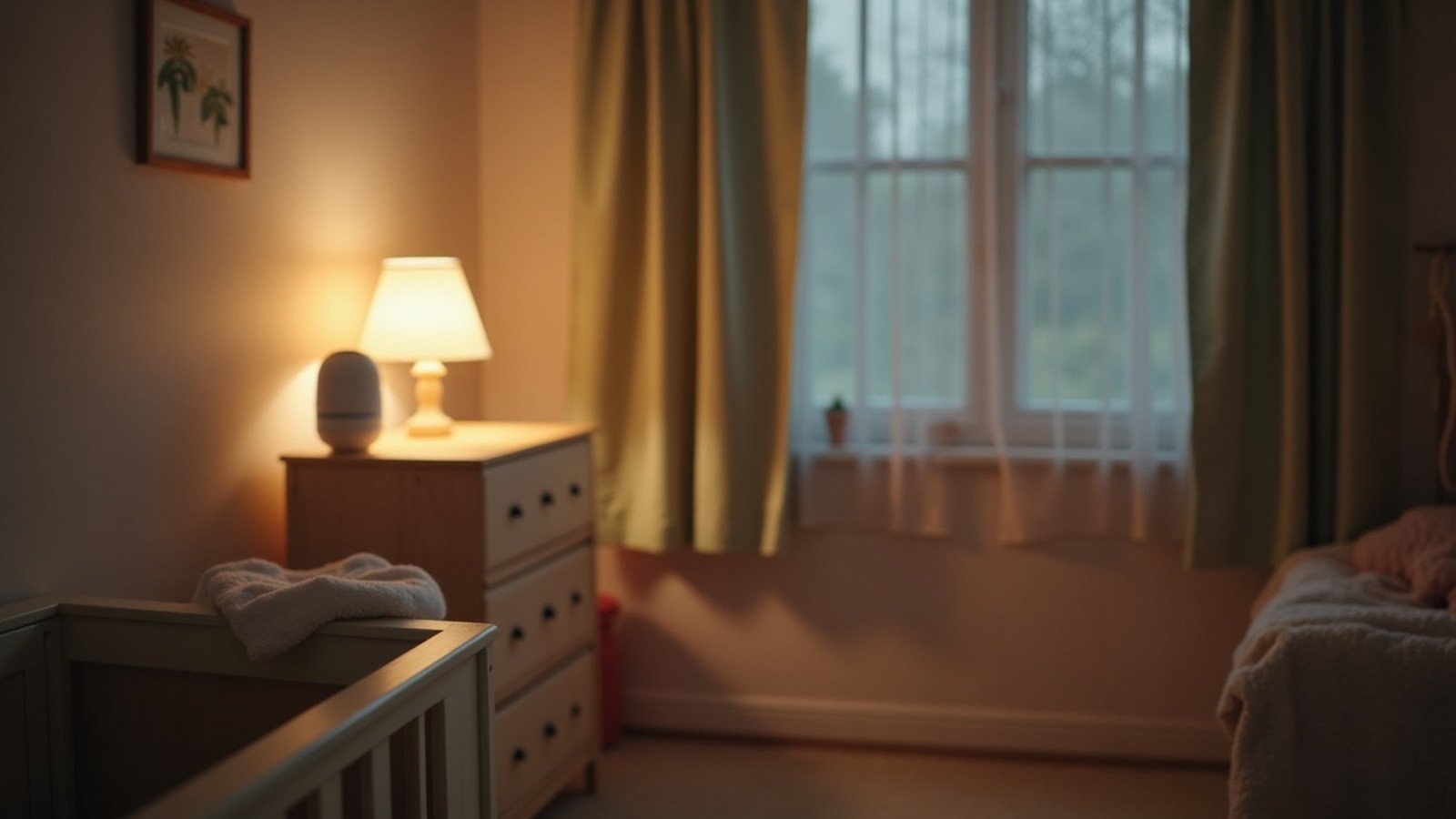
Sarah's real-life take: The white noise machine is the one piece of baby gear I would grab in a fire. We travel with it, we have backups, and to this day my kids associate that sound with sleep. A monitor helped me keep an ear on the room from downstairs while the white noise hummed, and if you are weighing options, my roundup of the best baby monitors for 2026 walks through what actually matters versus what is just marketing.
7. Feed well before sleep, and consider a dream feed
A hungry baby will not sleep well, and a baby who fell asleep mid-feed before getting a full meal will be back awake within the hour. So one of the simplest sleep wins is making sure feeds are full and complete, especially the last one before a longer stretch. Keep your baby awake enough to finish, do a good burp, and you cut down on those frustrating snack-and-snooze cycles that leave everyone short on rest.
The dream feed is a small trick worth trying once your baby is a few weeks old. The idea is to gently feed your sleeping baby late in the evening, around when you head to bed yourself, without fully waking them. Done right, it tops them off so they sleep through more of the early-night hours, buying you a slightly longer first stretch. It does not work for every baby, but when it does, those few extra hours feel like a gift.
Feeding and sleep are tangled together in these early months, so it helps to have a loose sense of what is normal for your baby's age. My simple baby feeding schedule lays out rough month-by-month patterns, and if you are pumping to share night feeds, my picks for the best breast pumps of 2026 can make those late sessions a lot less painful.
Sarah's real-life take: The dream feed was magic for my first and did absolutely nothing for my second, who simply woke whenever he woke regardless of what I tried. That is newborn life. Test it for a few nights, keep it if it buys you sleep, and let it go without guilt if your baby has other plans.
8. Share the night shifts and protect your own rest
Here is the tip I wish someone had grabbed me by the shoulders and insisted on. You cannot pour from an empty cup, and a depleted parent is not better for the baby. Your rest is not a luxury or a reward you earn after the baby sleeps. It is part of the plan, and it deserves to be protected as deliberately as anything on your baby's side of this list.
The how is about teamwork and lowered standards. If you have a partner, split the night into shifts so each of you gets one protected, uninterrupted stretch of sleep. One of you takes the early-night wakes, the other takes the early morning. If you are pumping or formula feeding, the other parent can fully cover a feed while you sleep through it. And the oldest advice in the book is still the truest: when the baby naps, you nap, and you let the dishes wait.
Sarah's real-life take: After my second, I hit a wall and admitted I needed protected sleep to function. We split the night into shifts, and my husband took the 11 to 3 stretch with a bottle of pumped milk while I slept hard with earplugs and the monitor on his side. That one change pulled me back from the edge. Asking for help was not failing. It was the most useful thing I did.
9. Keep your expectations realistic about newborn sleep cycles
Last but maybe most important for your sanity. Newborns sleep differently than adults, and understanding why takes a huge amount of pressure off. Their sleep cycles are short, often around forty-five to fifty minutes, and they spend more time in light, active sleep where they wiggle, grunt, twitch, and make all sorts of noises. A lot of that activity is not your baby waking up and needing you. It is just the surface layer of a sleep cycle, and rushing in can actually wake a baby who would have drifted back down on their own.
Frequent night waking in the newborn stage is normal, expected, and developmentally appropriate. Tiny tummies need frequent feeds, and "sleeping through the night" is not a milestone most newborns are built for yet. When you stop measuring your baby against an impossible standard, the whole experience softens. You are not behind. There is no schedule you were supposed to hit by now. For another grounded, reassuring overview of newborn sleep, the NHS Start for Life baby guidance is wonderfully calm and clear.
Sarah's real-life take: The single most freeing thing I learned, both on the ward and in my own home, was to pause before responding to a night noise. So many times I would wait thirty seconds and my baby would resettle entirely on their own. Those grunts and squeaks were just sleep, not a summons. Learning to wait gave both of us more rest.
Putting it all together without losing your mind
If reading nine tips at once feels like a lot, please do not try to overhaul everything tonight. That is a recipe for a stressed parent and a confused baby. Pick one. Maybe you set up safe sleep properly and add a white noise machine this evening, and that is the whole project for the week. Once it feels normal, add the next. Small, steady changes stack up far better than a dramatic single-night reinvention that nobody can sustain.
I would start where the payoff is biggest for the least effort. For most families that is nailing safe sleep, dialing in the room with darkness and white noise, and catching those sleepy cues before the overtired meltdown. Those three alone gave me back more rest than anything fancy. The routine, the dream feed, and shared shifts are powerful next steps once the basics are humming along.
Frequently asked questions about newborn sleep
How much should a newborn sleep in a day?
Most newborns sleep somewhere around fourteen to seventeen hours across a full day, but it comes in short, scattered chunks rather than one long block, and there is a wide normal range. Some days your baby will seem to sleep constantly, other days barely at all, and both can be perfectly fine. Rather than chasing a magic number, watch your baby. If they are feeding well, having plenty of wet diapers, and generally content when awake, they are very likely getting the sleep they need. Any real concerns about excessive sleepiness or feeding are worth a quick call to your pediatrician.
When will my newborn sleep through the night?
Honestly, later than most exhausted parents hope, and that is completely normal. Many babies do not sleep a long unbroken stretch until somewhere in the four-to-six-month range, and plenty take longer, especially if they are still feeding overnight. Newborns have tiny stomachs and short sleep cycles, so frequent waking is biology, not a problem you are failing to solve. The tips here can help your baby gradually consolidate more sleep into the night, but try to release the idea that there is a deadline. There is not, and your baby is not behind.
Is it okay to let my newborn sleep on me?
Holding your sleeping baby while you are awake and alert is lovely and completely fine, and contact naps are a normal part of early parenting. The important distinction is safe sleep for unsupervised sleep. Your baby should always be placed down on their back, on a firm flat surface, when you are going to sleep yourself or step away. The real danger comes from accidentally dozing off with your baby on you on a couch or armchair, which is much riskier than a bare bassinet. So enjoy those snuggles while you are awake, and move your baby to their safe sleep space before you rest.
Should I wake my newborn to feed?
In the very early weeks, often yes, and this is one to confirm with your own pediatrician. Many newborns, especially those still gaining back their birth weight, need feeds every few hours around the clock and should not go too long without eating, even overnight. Your pediatrician will tell you when your baby is cleared to sleep longer stretches without a wake-up for feeding, usually once weight gain is well established. Until then, gentle night feeds are doing important work. Once you get the green light, you can stop setting alarms and let your baby lead, which is a happy day for everyone.
Why does my newborn fight sleep when they are clearly tired?
This maddening situation almost always comes down to overtiredness. When a baby stays awake past their short window, their little body releases stress hormones that make it genuinely harder to settle, so an exhausted newborn can seem wired and frantic rather than sleepy. The fix is to get ahead of it by watching those early cues and starting the wind-down sooner than feels necessary. If you have already missed the window, lean hard on your calming tools, swaddle, white noise, dim room, gentle motion, and ride it out. Then aim to catch the next sleepy window a little earlier.
You are doing better than you think
If you have made it all the way down here on what is probably very little sleep, I want you to take a real breath. Newborn sleep is hard for everyone, the fog does lift, and none of this is a test you can fail. Your baby does not need a perfect parent running a perfect schedule. They need a safe place to sleep and a loving person nearby, and you are clearly already that person, or you would not be reading parenting articles at whatever hour it is right now.
So pick one tip from this list and try it tonight. Maybe it is setting up that bare, safe crib, or finally buying the white noise machine, or simply waiting thirty seconds before you rush in. Then be patient and gentle with both of you. When you are ready for the next stage, my gentle sleep training methods guide is waiting for you, and you can browse the related reading below. If something here helped, I would truly love to hear about it, so come send me a note and tell me how your nights are going. I read every single one.